
 EN
EN


Why a Chain Fence Is Key in Industrial Safety Standards
The Workplace's Invisible Protector
Head to an industrial site, a construction space, or a distribution yard, and, all things considered, before heavy operations are visible or audible, a person will cross a chain link fence. While it has a simple yet classic diamond design, it is one of the oldest and longest lasting styles of fencing. Most people do not recognize it for what it is, but an industrial chain link fence is one of the most critical components of an industrial site’s safety and security foundation; and, it's the most basic industrial fence option on the market. It is the first level of risk management, a critical industrial safety component, and a visible symbol of a company's commitment to the safety of its employees, equipment, and the general public outside the company's site. In the design and execution of safety protocols and regulations, it's the first and most effective line of safety in place. It also provides protective industrial fencing. It is a chain link fence.
Deconstructing the Standard: More Than Just Wire
The importance of some items is not immediately evident. A well-built industrial-grade chain-link fence is carefully engineered—but many overlook the complexity of the industrial chain-link fence. Starting with the wire, the most common is galvanized steel, with some coated with the durable, rust protection of polymer PVC. The coatings are not aesthetic— they protect the fence from rusting. The elements of sun, rain, and other corrosive chemicals can weaken the fence over time, and the fence need not be a liability over the years. There is a measurement of wire thickness known as gauge and it determines how strong and resistant the fence is to cutting and other impacts; stronger gauges resist cutting the strands of the fence. The size of the diamond openings are referred to as the mesh size (with smaller diamonds meaning stronger subsiding mesh-- no fingers, tools, or smaller pieces of waste can pass). The framework of the fence is a rigid structure, consisting of concrete posts and a definite spacing, designed to engineers standards; a top bar and some rows of netting tensioned to the posts make the mesh tightening system. If done correctly, a highly visible system resistant to cutting or other impacts is in place. Enclosing designated areas and keeping unauthorized deterred from entry surrounds the site and is a remaining liability.
Not only does this fulfill key safety goals like fence line security, isolation of hazards, and managing crowds, but it, along with some other components, give the section a no-obscured-view line along a fence line.
Safety Functions of a Chain Link Fence
The chain link fence section of a facility has many different functions all relating to safety and security, many of which impact every aspect of safety throughout operations.
Perimeter Security and Access Control: The fence’s most overall and general function is to make a defined border. This border serves a dual purpose: it functions to keep out unwanted people while also keeping the outside (to include potential threats like theft, vandalism, sabotage, and most importantly, untrained people who is free to walk into high hazard areas with moving equipment, high voltage, or chemical storage) outside). This border also serves to control the flow of people into the controlled area at defined entry points (gates).
Hazard Containment and Zone Delineation: Every facility has areas within it that serve different purposes or have different safety mitigation strategies in place, and a chain fence is a perfect means to set up internal perimeters. A chain fence can cut off construction areas, encircle storage of hazardous materials, surround dangerous machinery, or mark safe pedestrian walkways to separated from vehicle pathways. While it won't eliminate the risk, it can greatly mitigate the risk. It is also a convenient means of fencing off dust or small flying debris from operations in permanent machinery.
Fall Protection and Debris Guarding: In multi-level buildings, mezzanine floors, and loading areas, chain link fabric is common and standard as a safety fence for upper levels or as a debris catching net. It functions as a safety net that allows visibility but keeps hold of tools, materials, or people that should not drop to the floors below. Unlike a completely solid material that could create a hazardous wind load, the fabric can partially relieve some of the wind load on a barrier, while still offering protection.
In yards and parking spaces, fences separate pedestrian movements and truck route, loading bays, and mobile equipment. This mitigates risks, directing pedestrians along safe, designated pathways, away from large vehicles' blind spots.
Integrating New Safety Measures Beyond Metal
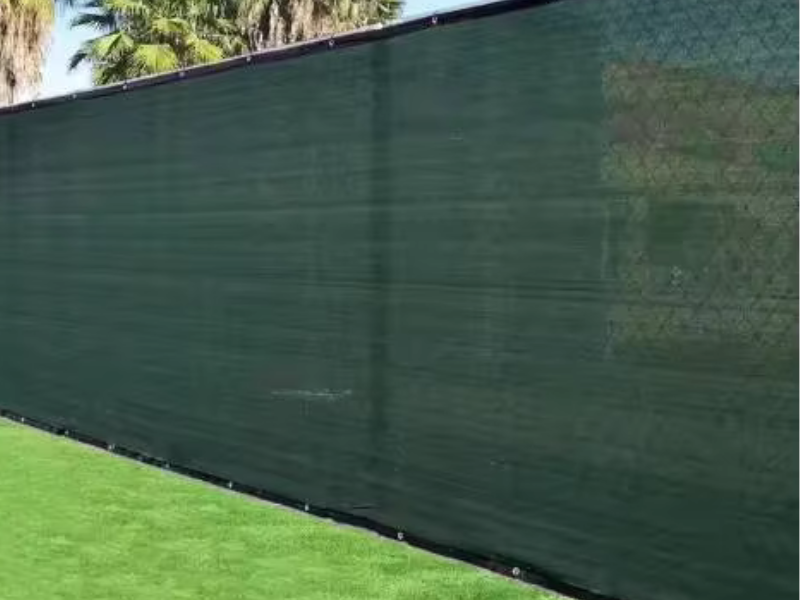
People recognize the chain link fence as a classic, but modern safety needs even more. That's where knowledge of high performance materials is needed. Let's say that a temporary work zone needs to be set up inside a plant. A chain link fence can provide the structure, but attaching a bright orange, high visibility polyethylene netting or a heavy duty polyethylene tarp to the fence does more than transform it. It enhances visibility, blocks wind and dust, contains welding sparks, or provides visual privacy. Companies like Blue Ocean Plastic, with more than 10 years of experience in manufacturing PE tarps, mesh netting, and covers, understand this. Their heavy duty tarps covering equipment and extra debris containing reinforced mesh can be integrated with fence systems. This allows the construction of multifaceted safety zones. The combination of the permanent fence and the high performance fabric mesh barriers helps safety managers meet a variety of ongoing challenges.
Finding the Right Risk Barrier
Not all fences have the same functions, and choosing one can have significant safety implications. This is why careful consideration is needed. What is the objective? Is it keeping out casual trespassers, or is it containing high impact debris? Are there weather elements to protect against, or is it weather protection? Are you blocking the site visually? Key aspects to address are:
Material and Coating: If it's an industrial or coastal site, vinyl coated or epoxy paint fencing is less likely to rust and provide protection. The coating allows for color coding. For example, safety yellow is used for fencing that outlines hazards, green can designate a safe area, and black is an option when a visual blend on the site is needed.
Gauge and Mesh Size: Heavier gauge wire, such as a 6 or 9 gauge, is recommended for areas that require higher security. If tighter safety is needed, a one inch mesh is recommended as it eliminates potential handholds which can be dangerous.
Height and Top Treatment: While a standard height may be enough for simple fencing to designate an area, higher fencing is necessary for serious security to be achieved. Anti-climb features such as barbed wire or curved tops can be used, where standards allow, to increase perimeter security.
Integration Points: The fence should be designed to work with other safety features. This includes strong gates with the right latches, fittings for warning signs or safety netting, and a concrete footing that considers soil material and the applicable load bearing capacity.
The Tangible Benefits of a Strategic Investment
Seeing a chain link fence as a cost is a very narrow minded way of thinking. When that fence is custom selected and installed to meet the specific safety standards of the industry, then it is a strategic investment with a clear return. The top of the line benefit is risk mitigation. The fence reduces the risk of accidents, injuries, and damage to property because it keeps unauthorized people out and keeps potential hazards contained. This results in lower insurance premiums, less work stoppages due to incidents, and protection against potentially dire liability claims. In addition to this, a well maintained fence that is in compliance with the code of standards shows positive diligence to safety inspectors and regulatory groups like OSHA, easing the process of audits and compliance. It also fosters a positive or safety culture. Clearly visible, well defined boundaries show employees that their safety is prioritized, which in turn improves their morale and focus. Finally, the fence protects valuable equipment and inventory which directly affects profit as it protects assets from theft and vandalism.
Conclusion: A Foundation of a Safe Operation
To conclude, the industrial chain link fence proves that effective safety measures stem from straightforward control systems, and from this perspective, the safety fence is a simple, yet irreplaceable piece of technology. It mitigates risks every hour of the day while working in every weather condition to bring a sense of order and control to the environment. For the various industries, the chain link fence's applications range from hazard containment to perimeter control. Pairing the chain link fence with today's engineered performance safety fabrics and netting, safety managers, purchasing agents and facility designers can customize a flexible, effective risk control system. Selecting the appropriate chain link fence and safety components is foundational for the long term operational safety of a facility, serving as a visible embodiment of the operational principle, Safety First.