- Huangdao,Qingdao,Shandong,China
- +86-13963982913
Mon - Fri: 9:00 - 19:00

 EN

Mon - Fri: 9:00 - 19:00

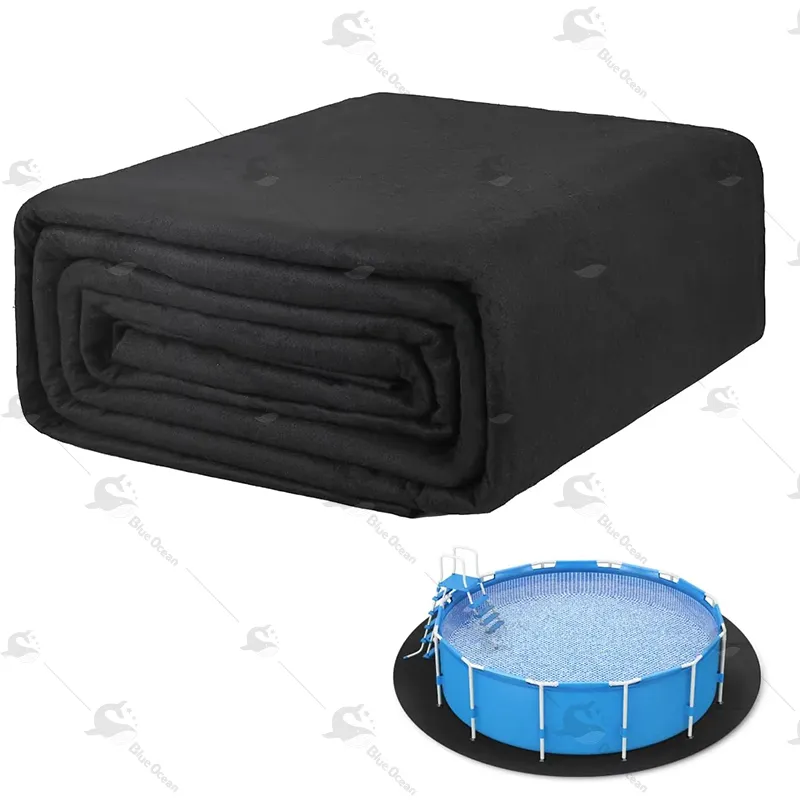
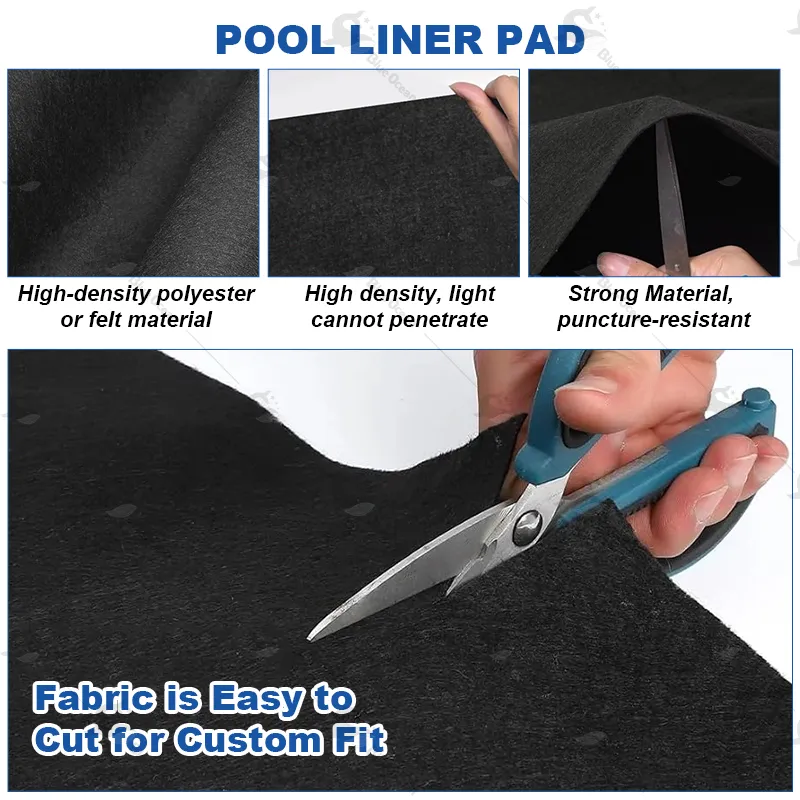
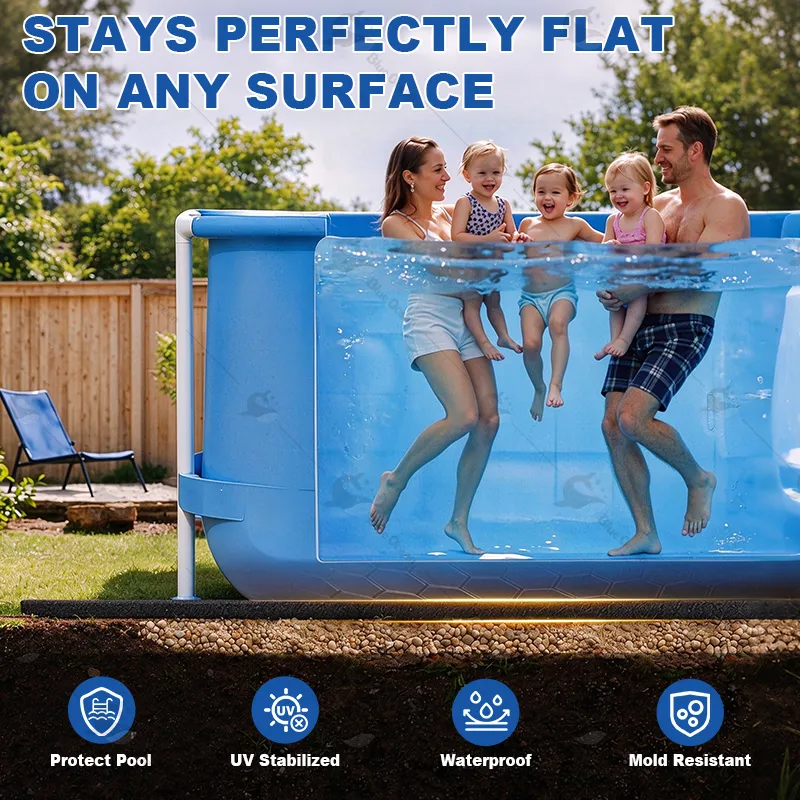
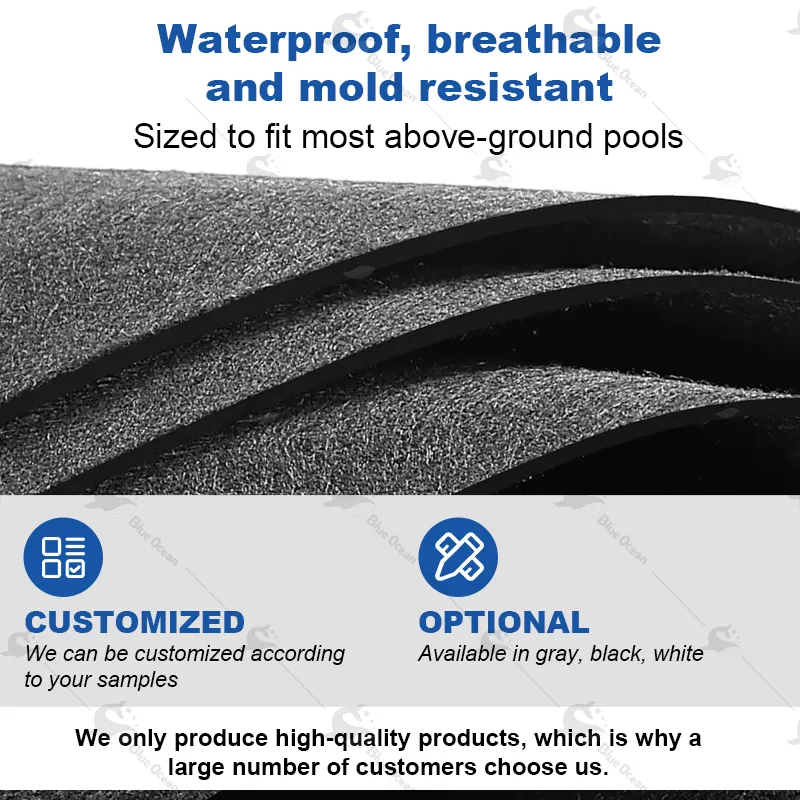
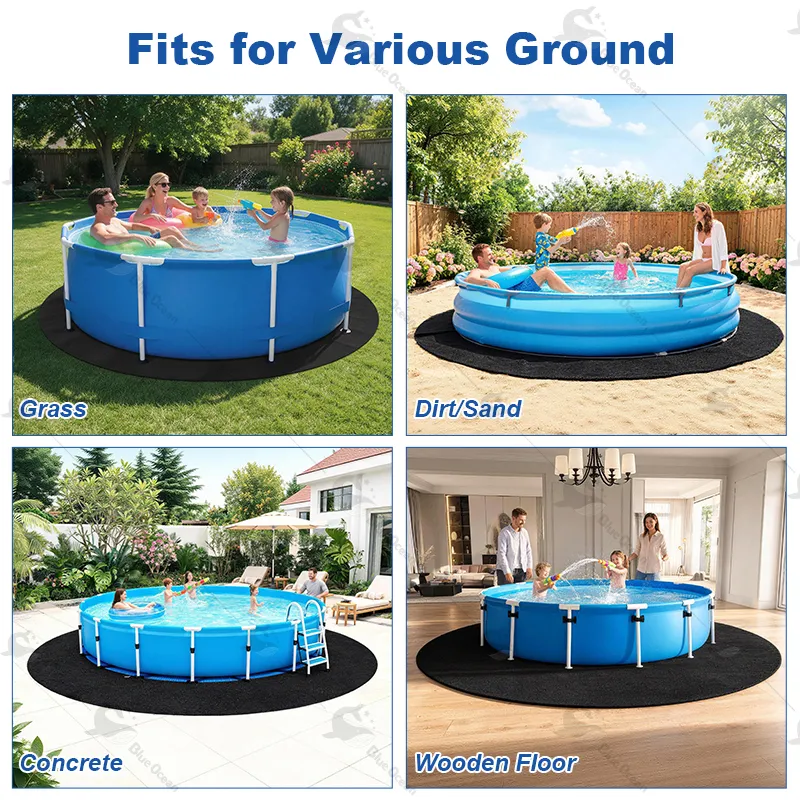
Black felt pool pad underlayment shields liners from stones and roots and softens the floor underfoot.
Product Detailed Content
For above ground pool brands and outdoor equipment distributors, a black felt pool pad is the low-cost layer that protects the liner from rough ground and extends service life.
Key Advantages
Specifications
The figures below are trade ranges; a pool pad should be signed off against a written mill data sheet, not a catalog photo.
Material: needle-punched polyester or polypropylene nonwoven felt; recycled fiber content verify with manufacturer.
Color: black as shown; charcoal and gray tones available on request.
Thickness: commonly 3 to 10 mm for above ground use; select by ground condition and pool size.
Mass per area: often 200 to 600 g/m2; heavier grades suit rocky or compacted sites.
Format: folded panel, rolled sheet or die-cut round disc; custom diameters for a pool pad available on request.
Sizes: matched to common round, oval and rectangular footprints; a pool pad should extend slightly beyond the pool wall.
Finish: straight or rounded corners, optional adhesive tape strips for joining adjacent pieces.
Packing: compressed folded bundle in PE sleeve plus carton, or retail-printed polybag with header card.
Ground conditions drive the specification more than pool size does. A pool pad laid on crushed stone needs a higher gram weight than one placed on level turf, so request the thickness tolerance and puncture test method in writing. Match the panel to the finished footprint plus the supplier's recommended margin before you place a repeat order.
Application Scenarios
A pool pad belongs under any above ground basin where the ground cannot be guaranteed smooth and clean.
Clear the site of sharp objects first, then level and compact the base; a pool pad compensates for minor texture but will not fix a slope or a deep rut. On grass, expect some settling during the first weeks and check the perimeter after the pool is filled.
Product Features & Details
Needle punching entangles loose fibers into a dense mat without binders or weaving, which gives the sheet its tear resistance and its ability to absorb point pressure. A pool pad works by distributing the weight of water and swimmers over a wider area, so a single pebble is less likely to press through the vinyl liner above it. The felt also holds a thin air layer that softens the floor and takes the chill off cold ground in early season. Thickness and density matter more than color here, and a pool pad specified for crushed stone should be heavier than one for level turf; ask the mill to state the grade in writing.
Installation is straightforward but order matters. Remove stones, twigs and glass, rake the area level, and lay the pool pad with the smoother face up before the liner goes down. Join multiple panels with the supplier's tape rather than overlapping loose edges, since a ridge under a filled pool can telegraph through the floor. Trim excess material after the wall is positioned, keeping a small margin of pool pad outside the footprint. Do not stretch the felt taut; it should sit flat without folds that could work into a crease.
Polyester felt resists rot, mildew and most pool chemicals at the dilutions used around a residential basin, though concentrated chlorinated water should not be left standing on the mat. Drain and dry a pool pad fully before folding it for winter storage, and keep it in a sealed bag away from rodents and direct sun. Folded creases relax after a day laid flat in warm air. Inspect the pool pad at each seasonal setup and replace panels that have thinned, torn or become embedded with grit.
Retail programs usually ship a folded, compressed pool pad inside a printed polybag or carton sized to the pool kit, with the panel count and footprint printed on the label for easy picking. Bulk programs favor flat-packed bundles on pallets to cut freight on a low-density product. Adhesive seam tape, ground anchors and illustrated instruction sheets can be packed in the same carton. Carton artwork and barcodes are confirmed before production, and samples of the packed unit can be approved prior to a volume run.
Why Choose Us
We cut each pool pad to the buyer's footprint rather than offering one universal size, so round, oval and rectangular pools fit without field trimming. Die-cut tooling, folded dimensions, gram weight and carton artwork are recorded on a written specification before production starts. Production begins only after the buyer signs off on a physical panel, and the approved size set can be reordered season after season. Distributors often combine several diameters in a single container, which keeps freight on this bulky, low-weight item under control.
Warranty claims on a low-margin accessory usually trace back to gram weight drifting between batches. Our inspection covers basis weight, thickness, panel dimensions, edge finish and visible defects on every lot, and retained samples let us trace a pool pad back to its fiber lot if a customer reports premature wear. Questions about substrate preparation, seam tape or chemical exposure go to production staff who work with the felt daily. Photos of each lot, pallet maps and carton proofs are available before the container is booked.
Price, minimum quantity and production slot move with size, gram weight and packing style, so every enquiry is quoted individually. Tell us the pool diameter, the quantity you plan to stock, the destination port and the month you need delivery, and state whether a pool pad should arrive in retail packing. You will receive a written specification and a container loading plan, which makes competing quotes easy to compare line by line.

OEM UV Resistant Waterproof PVC Truck Side Curtain Cover Heavy Duty Truck Tarp Covers D-ring

New Promotion Eco-Friendly Ball Bungee Cord Canopy Elastic Toggle Late Ball Tie Loop Shock Black

Heavy Duty Pool Liner Pad 13*13ft - Cut-to-Fit Felt Pad for Above Ground Pools, Protective Mat for Pool Bottom
Black Felt Pool Pad for Above Ground Use, OEM