
 EN
EN

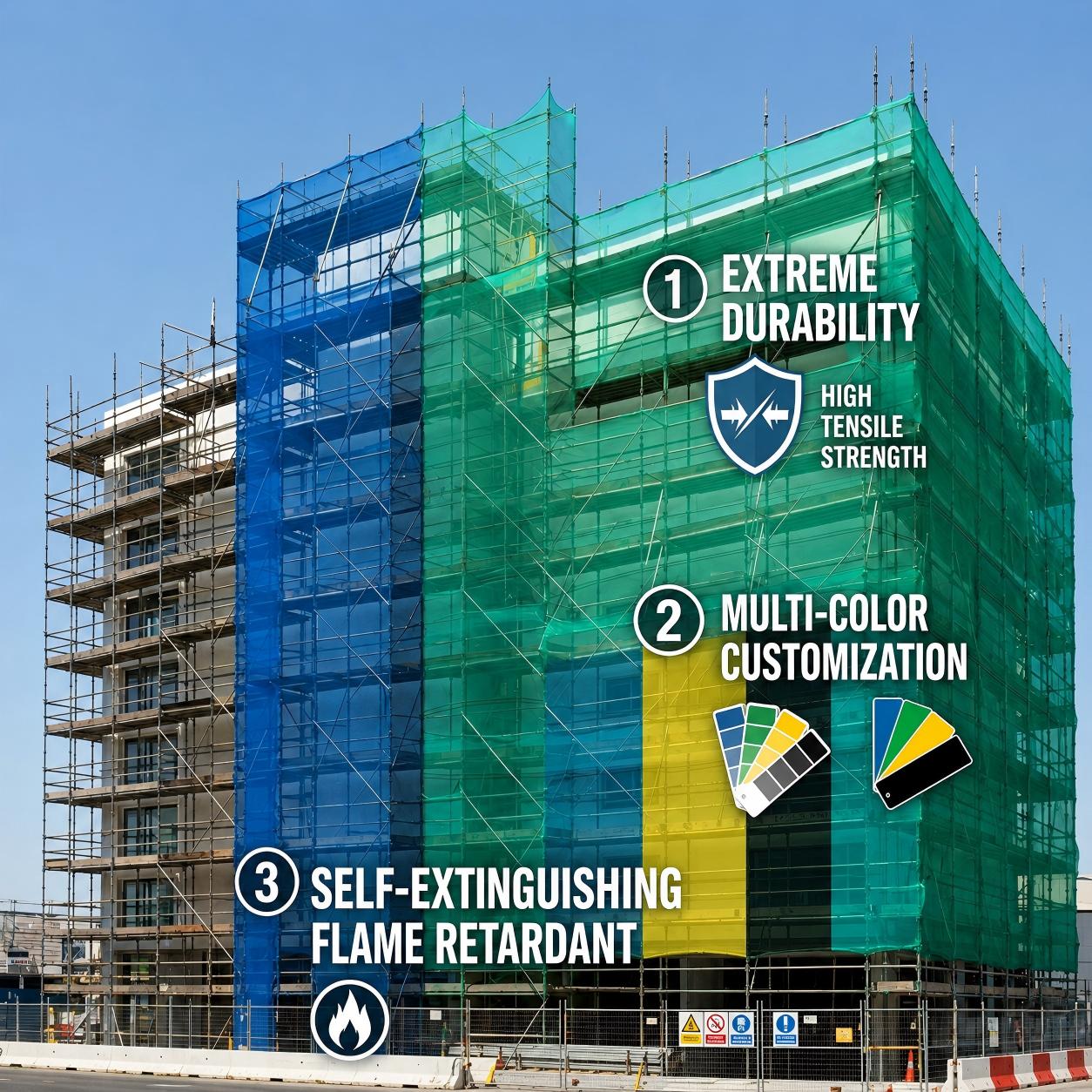
Are you confident that the debris netting on your job site will actually hold up when a heavy tool drops or high winds hit?
For construction managers, site safety directors, and building material distributors, sourcing scaffold debris netting isn’t just about covering a frame—it’s about risk management, worker protection, and keeping project deadlines intact. With dozens of mesh specs and material grades on the market, choosing the wrong protective netting can lead to costly job site downtime, compliance fines, or premature tearing.
Here is what you need to evaluate before placing your next bulk or custom netting order.
1. Material & Tensile Strength: Will It Hold Under Pressure?
The primary job of perimeter debris netting is containment. Whether it's falling masonry, loose tools, or construction dust, your netting must withstand sudden impact and sharp edges without shredding.
-
High-Density Polyethylene (HDPE): Always look for premium knitted HDPE material. Unlike standard woven fabrics, knitted netting won't unravel when cut or punctured by debris.
-
Tear Resistance & Reinforced Edges: Check the tensile strength and burst pressure specs. For heavy-duty construction sites, reinforced buttonhole borders or heavy hemmed edges are essential to prevent tearing at attachment points under high wind loads.
2. Flame Retardancy & Safety Standards: Does It Pass Local Regulations?
Site safety inspectors don't compromise on fire safety—neither should your supplier.
-
Flame Retardant (FR) Treatments: Depending on your market, job sites often mandate flame-retardant debris netting (such as NFPA 701 standards in North America or equivalent EN specs in Europe).
-
OSHA Compliance: Ensure the netting meets or exceeds OSHA requirements for job site perimeter protection and falling object prevention. Using non-compliant netting can lead to immediate work stop orders.
3. UV Resistance: How Long Will It Last in Harsh Environments?
Outdoor scaffolding netting is constantly exposed to direct sunlight, temperature swings, and humidity. Standard plastics degrade quickly under sunlight, becoming brittle and snapping within months.
-
UV Inhibitors: Quality debris netting must be treated with UV-stabilizing additives. This ensures the netting retains its tensile strength, flexibility, and color integrity even during long-term commercial projects in high-sunlight regions.
4. Customization: Getting the Right Specs for Your Specific Application
Off-the-shelf sizes don't always fit specialized scaffolding systems or custom enclosures. As a direct manufacturer, custom options are often critical for smooth site installation:
-
Mesh Size & Density: Do you need tight mesh for windbreak and fine dust containment, or an open mesh design for maximum air circulation on high-rise scaffolds?
-
Roll Sizes & Sheet Dimensions: Pre-cut sheets with eyelets versus continuous rolls—getting exact dimensions saves significant labor hours during installation.
-
Color & Branding: Standard green, blue, black, or custom safety colors. Custom logo printing on netting can also transform a safety barrier into active site marketing.
Looking for Custom Construction Debris Netting Solutions?
Getting the right protective netting shouldn't be a guessing game. Whether you need standard scaffold rolls or custom-manufactured flame-retardant debris netting built to your exact specifications, direct factory sourcing guarantees both compliance and cost efficiency.
Contact our engineering team today to discuss your project requirements, request specs, or get a custom quote.