
 EN

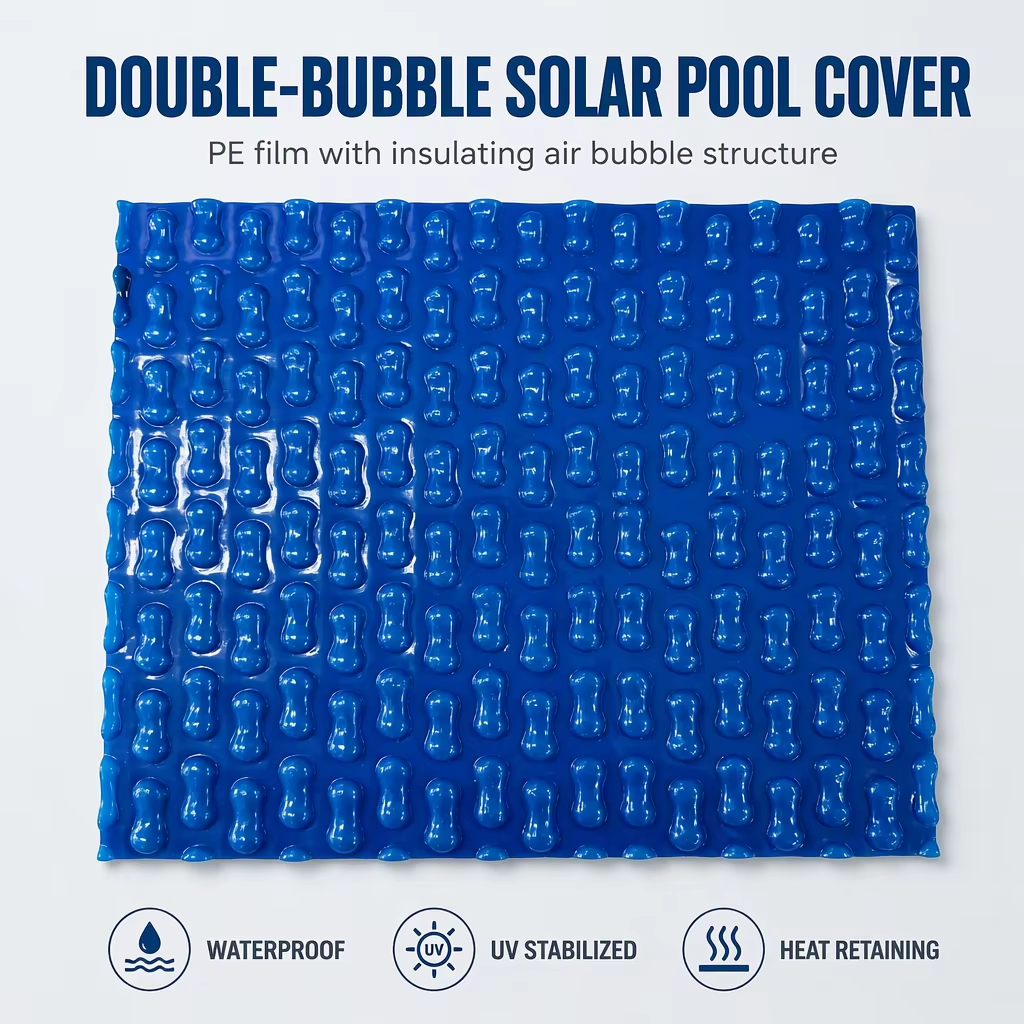
A solar cover is one of the easiest pool products to import and one of the hardest to get right. For importers, the real risk is not the unit price. The risk is the supplier. Two factories can quote the same solar cover at the same thickness and still deliver a solar cover that lasts one season versus three. A solar cover that matches the local climate sells faster than a cheaper one that tears after a month. Most importers start with one solar cover SKU and expand once they see repeat orders. This guide explains the specifications that separate a profitable SKU from a returns headache, and the questions to ask a factory before you book a container.
What a Solar Cover Does on a Pool
A solar cover is a sheet of UV-stabilized polyethylene film with one side formed into thousands of small air bubbles. The same solar cover blocks most evaporation, which is where the majority of pool heat and water loss happens. The job of every solar cover is to hold heat, not to make the pool safe to swim. Verify evaporation test data with your manufacturer before you print any claim on the box.
Why Polyethylene Is the Standard Material
Nearly every consumer solar cover uses polyethylene (PE), not PVC or vinyl. A quality solar cover is made from virgin PE resin blended with UV inhibitors. A solar blanket and a solar cover are the same item by another name. When you compare two quotes, the resin behind a solar cover matters more than the printed mil number on the label. Ask any supplier for the UV additive percentage and the resin grade before you source a solar cover for resale. A solar cover built from recycled resin smells on arrival and yellows within weeks.
Pool Cover Thickness: Mil, Micron and GSM
Mil, thousandths of an inch, is the common US retail spec at 8–12 mil for residential pools. Micron, 200–300 μm, covers the same range, and GSM, grams per square meter, is a weight proxy at 80–200 gsm. Pool cover thickness drives both price and lifespan, so confirm the gsm-to-mil mapping with your manufacturer. A solar pool cover graded at 12 mil handles harsh-sun markets better than a thin residential film. For importers, the rule is simple: 8 mil suits residential pools, while 12 mil and above suits commercial or harsh-sun markets. A solar cover with the wrong pool cover thickness fails early in the field.
|
Spec |
Residential |
Commercial / harsh sun |
|
Thickness |
8 mil (200 μm) |
12 mil (300 μm)+ |
|
Bubble size |
10–12 mm |
12 mm+ |
|
Typical GSM |
80–140 gsm |
140–200 gsm |
|
Expected life |
1–3 seasons |
Longer with care |
Bubble Size and Why It Matters
Bubble diameter on a standard solar cover runs 10–12 mm, though some commercial grades use larger bubbles for better insulation. Consistent bubble height and wall thickness mean even heat retention and fewer weak points. A solar cover with thin bubbles traps less heat overnight, while a solar cover with thick walls resists pool chemicals better. A bubble pool cover with uniform cells holds its shape through a full season of thermal cycling. Buyers rarely ask about bubbles, but a weak bubble pool cover is the first thing a homeowner complains about.
Color and Light Transmission
Blue is the safe default for most import markets. A blue solar cover transmits enough UV to heat the water while tinting the surface to slow algae growth and hide debris. For most buyers, translucent blue is what they picture when they shop for a solar pool cover. A blue solar cover also hides dust better than a clear one during long off-season storage. A solar cover in the wrong color still works, but blue is what buyers expect. Most importers stock blue first, then add a clear solar cover only for the premium tier.
Sizes, Shapes and OEM Cutting
A solar cover ships on a roll, gets cut to size, and the edges are heat-sealed. A flexible supplier supports custom bubble colors and branded cartons for distributor programs, which is how a generic solar blanket becomes your own SKU. The phrase solar pool cover and solar blanket mean the same product to most buyers. Confirm the reel diameter before you quote freight, because a thicker solar cover rolls into a larger core that changes carton count. A solar cover cut one inch short leaves a cold ring at the pool edge.
Lifespan and UV Stabilization
A properly stabilized residential solar cover lasts 1–3 swimming seasons with normal use. UV stabilized polyethylene is the material behind that lifespan. The additive load, not the film color, decides how long the solar cover survives in the field. A solar blanket left in the sun fades faster than one stored rolled. Store the solar cover shaded and it rewards you with a second season of retail value. A solar cover that survives two seasons earns a reorder.
Quality Checks Before You Import
Before you book a container, run five checks on a production sample. Weigh a cut piece and compare it to the quoted GSM. Check bubble uniformity across the roll width, because defects cluster at the edges. Pull a sealed edge and confirm it holds without splitting. Confirm the UV additive is in the resin batch, not a surface spray. Request a sample from the actual production run, not a showroom piece. A bubble pool cover that passes all five survives shipping and a full season of use. Skipping these checks is the fastest way to turn a solar cover SKU into a refund line.
Packaging, MOQ and Container Loading
Most covers ship rolled in a cardboard carton. Folded packs save space but crease the film, which is why rolled is preferred for premium lines. Confirm carton dimensions and how many cartons fit a 20 ft or 40 ft container, because cube, not weight, usually limits the load. MOQ and lead time vary by season, so book ahead of the Northern Hemisphere spring peak. A reliable supplier quotes both a sample lead time and a mass-production lead time for each solar cover order. A solar cover shipped folded arrives with a permanent crease line.
Compliance Marks to Verify
Ask your supplier about REACH and RoHS alignment for the EU and California Prop 65 for the US, covering the polymer and any printing inks. Do not assume a generic compliant stamp covers your destination. Request documentation for the specific market you sell into, and keep a copy of every solar cover compliance file where your buyer can see it. A responsible solar cover exporter provides material safety papers per shipment. UV stabilized polyethylene suppliers should name the additive package on the spec sheet.
How to Evaluate a Solar Cover Factory
Weigh sample responsiveness, batch-to-batch consistency, and whether the factory can show its extrusion and bubble-forming line. A supplier that answers technical questions about resin grade and UV loading is safer than one that only quotes per square meter. For the Blue Ocean line, request the spec sheet, a production sample, and lead-time confirmation before you commit volume. A good partner also explains how film thickness, bubble size, and additive load work together to set the retail price you can defend. Visit the line once and you will understand why one solar cover costs more than another.
Frequently Asked Questions
Q: What thickness of solar cover sells best for residential import? A: 8 mil, about 200 micron, is the volume residential spec, while 12 mil suits premium and commercial lines. Confirm the right spec with your manufacturer for your climate band, because a solar cover tuned to the sun zone outsells a generic one.
Q: Can a solar cover be private labeled? A: Yes. Most factories cut to size, heat-seal edges, and apply printed logos or sewn labels for OEM runs on each solar cover you order. A private-label solar cover lets a distributor own the shelf space.
Q: How should covers be packaged for export? A: Rolled in cartons protects the film best. Folded packs save cube but crease the material, which shortens solar cover life on the shelf. A creased solar cover looks used before it ships.
Q: What compliance documents should I request? A: REACH and RoHS for the EU, Prop 65 alignment for the US, plus material safety documentation for your market before you import a solar cover at scale. A documented solar cover is easier to clear customs than a cheap one.
Q: How long does a solar cover last? A: Typically 1–3 seasons for residential use with proper care. Verify expected life with your manufacturer, because UV stabilized polyethylene quality varies by batch and by sun zone. A well-made solar cover pays back in one season of saved heating cost.
Table of Contents
- What a Solar Cover Does on a Pool
- Why Polyethylene Is the Standard Material
- Pool Cover Thickness: Mil, Micron and GSM
- Bubble Size and Why It Matters
- Color and Light Transmission
- Sizes, Shapes and OEM Cutting
- Lifespan and UV Stabilization
- Quality Checks Before You Import
- Packaging, MOQ and Container Loading
- Compliance Marks to Verify
- How to Evaluate a Solar Cover Factory
- Frequently Asked Questions