
 EN

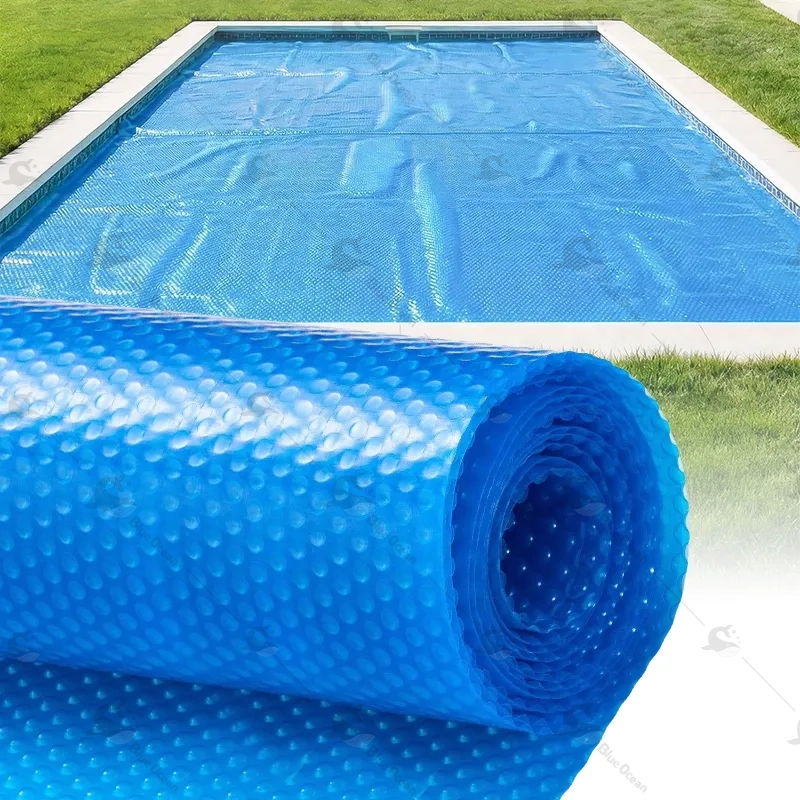
A pool loses heat and water every hour it sits uncovered, and most of that loss happens overnight. A solar pool cover deals with it at the surface, where it begins, and costs nothing to run. Owners often expect a complicated fix; the practical first step is a solar pool cover that simply floats.
How a Solar Pool Cover Works
A solar pool cover is a floating polyethylene film with sealed air bubbles on one face. The bubbles sit against the water and the flat face looks up. Sunlight passes through the film and warms the top layer; the trapped air then slows the escape of that warmth after sunset.
Nothing about the process is active. "Solar" refers only to passive warming by sunlight. A solar pool cover is entirely passive: one sheet of film, with no moving parts, nothing to connect and no supply of any kind. A solar pool cover produces nothing and stores nothing.
Covering the surface also blocks the path water takes to become vapor. Evaporation control matters because vapor carries warmth away, so a solar pool cover holds both water and temperature.
What a Solar Pool Cover Actually Delivers
Heat retention comes first. A pool warmed through a sunny afternoon can lose much of that gain before breakfast. A solar pool cover laid on at closing time keeps water closer to the temperature swimmers left it at, stretching the usable season at both ends.
Water saving follows. Less evaporation means fewer top-ups and less strain on water balance. Sanitizer demand drops too, because a solar pool cover takes in less debris and less of the light that feeds algae. Blue film cuts light penetration further.
Cleaning time is the quiet benefit. Leaves and dust land on the sheet instead of in the water. A solar pool cover does not replace filtration, but it cuts the load on it, and crews spend less time skimming.
Why a Pool Needs One
An uncovered pool is an open system. Wind pulls vapor away, cool night air pulls warmth away, and debris arrives continuously. A solar pool cover closes that surface for the idle hours, which is most of the day.
The case is strongest where water is costly, the season is short, or nights turn cold. A pool topped up weekly is paying for water nobody swam in. A solar pool cover stops that drain at the source.
Commercial operators feel the same losses at scale. A hotel pool has a fixed closing hour and a long idle stretch overnight, exactly the window a solar pool cover covers best.
Skipping it has a cost that is easy to miss. Without a solar pool cover, evaporation control depends entirely on the weather, the water level drifts, chemical balance moves, and morning water is colder than it needs to be.
Where a Solar Pool Cover Makes Sense
Season sets the value of a solar pool cover. Spring and fall, with warm days and cool nights, are when a solar pool cover does its most visible work. High summer still benefits overnight.
Climate changes the priority. Dry, windy regions lose water fastest, so evaporation control leads there. Humid regions lose less water but still lose warmth after dark.
|
Setting |
Main reason to cover |
Daily rhythm |
|
Private backyard pool |
Longer season, fewer top-ups |
Roll on after the last swim |
|
Hotel or resort pool |
Overnight warmth, cleaner opening water |
Staff roll on at closing |
|
Indoor pool |
Limit vapor and warmth loss indoors |
Cover during closed hours |
|
Seasonal vacation home |
Stable water while the property is empty |
Cover the whole idle stretch |
A reel makes that rhythm practical, since lifting a solar pool cover by hand is slow on a large pool. A solar blanket of this kind rewards a routine that owners can actually keep.
What a Solar Pool Cover Does Not Do
It is a floating thermal blanket, not a load-bearing barrier, and must never be sold as a child-safety device. A solar pool cover also cannot hold a set water temperature in cold weather; it slows losses rather than creating warmth on demand.
Buyers also call it a bubble pool cover or a solar blanket, and those names describe the same passive sheet. Neither a solar blanket nor a bubble pool cover replaces a safety product.
Film made with UV stabilized polyethylene resists the brittleness that long sun exposure causes, but chlorine splash and poor storage still age it. UV stabilized polyethylene is a material choice, not a service-life promise, and no honest supplier quotes a fixed number of seasons.
Making It Part of the Daily Routine
Coverage decides the result. A solar pool cover left on for six hours does six hours of work; one rolled off at midday gives back much of what it held overnight. Spread the sheet to the waterline, bubbles down, and close the gap along the edge.
Roll rather than fold. Folding a wet solar pool cover traps chlorinated water in the crease, and folding it in direct sun bakes in a weak line. Let it dry before winding and store the roll out of direct sun.
Creases leave gaps, and gaps undo the benefit along the edge. These habits cost nothing, yet they decide whether a solar pool cover earns its keep over a full season.
Frequently Asked Questions
How long should a solar pool cover stay on each day?
As many idle hours as the pool allows. Overnight coverage delivers the most.
Which way do the bubbles face on a solar pool cover?
Down, against the water, with the flat film up. A solar pool cover fitted upside down traps condensation and shortens bubble life.
Does a solar pool cover work on cloudy days?
Yes, though the warming effect is smaller. Blocking vapor loss and keeping debris out continue regardless of cloud cover.
Can a solar pool cover be used on an indoor pool?
Yes. Indoor pools lose vapor and warmth to the room during closed hours.
Is a solar pool cover a safety cover?
No. ASTM F1346 covers the separate safety-cover class with load and labeling requirements. A solar pool cover floats and cannot support a person.
The Case for Covering Every Night
Put the losses side by side: water replaced, warmth rebuilt, chemicals rebalanced, debris skimmed. A solar pool cover reduces all four during the hours a pool is unused, with no routine beyond rolling it on and off. That is why a pool running without a solar pool cover is working harder than it needs to.